Ableism, Body Shaming, and the Silent Pain Many Disabled People Carry
By Sanjeev Agnihotri
Treasurer, Rotary Club of World Disability Advocacy (RCWDA)
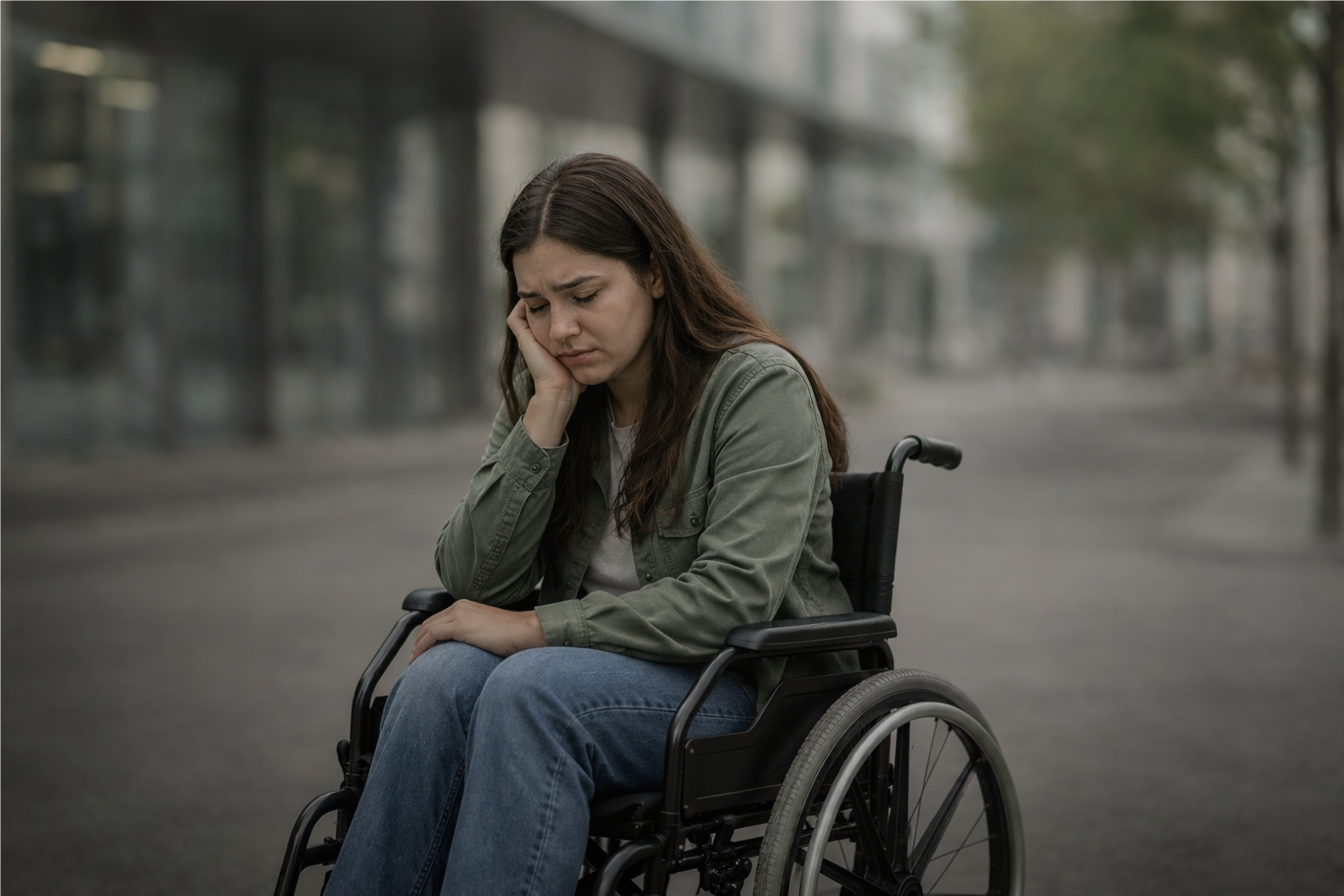
Recently, I came across a social media post by a #disabled influencer from India who shared a video about her broken wheelchair. What disturbed me more than the video itself was one cruel comment from a man who body shamed her and questioned why she was using a wheelchair instead of “fixing” herself.
That comment brought back many painful memories from my own life. I am a polio survivor and presently living with #PostPolioSyndrome.
Throughout my childhood and even into my adult years, I experienced body shaming and ableism from both children and adults.
When I was young, many kids at school mocked my obesity and the fact that I used a wheelchair. Some laughed openly, others whispered behind my back. But what stayed with me wasn’t just the laughter it was the words.
One word I heard repeatedly while growing up in North India was “Langra,” a derogatory term commonly used for someone who walks with a limp or cannot walk properly. In English, it may be compared to words like “cripple,” “gimpy,” or “lame.” At that time, people used such words very casually without understanding how deeply they could hurt a person emotionally.
Ironically, many people who used these words probably did not even consider themselves cruel. They thought they were joking, teasing, or simply describing someone. But repeated #bodyshaming slowly affects the confidence, dignity, and mental health of disabled people.
One part of body shaming that stayed with me throughout my childhood and youth was the repeated use of certain words. People often called me “Mota” because of my obesity and “Langda” because of my difficulty walking. While “Mota” or “fatso” was sometimes used jokingly by close friends in a loving way, the word “Langda” always carried a different pain. It was usually spoken with ridicule, pity, or disrespect. Even when I tried to ignore it and act strong outside, such words slowly affect a person from inside. They remind you again and again that society sees your disability before it sees you as a human being. More than me, I often saw my siblings, cousins, and friends getting angry and hurt hearing those words used against me. Over time, I became somewhat used to body shaming, especially when people used those insults after losing arguments or trying to humiliate me publicly. But no one truly becomes completely immune to hurtful words. Even when we smile outside, those comments leave emotional scars somewhere deep within us.
I was fortunate in one important way. My parents, siblings, cousins, and friends always stood beside me. Even when some people questioned why I was going to restaurants, cinemas, stadiums, or public places despite my disability, my family never isolated me. They included me everywhere.
I still remember hearing comments like:
“Look, he cannot even stand and walk, but he still wants to go to the movies."
“Why does he come to public places?”
“Why doesn’t he stay at home?”
People often forget that disabled people are human beings with emotions, dreams, friendships, and the same desire to enjoy life as everyone else.
Over time, I also noticed another painful reality. Whenever people could not defeat me in arguments, studies, work, or discussions, they often attacked my body or disability instead. Body shaming became their final weapon.
This happens to many disabled people around the world every day.
Thankfully, society has slowly improved over the years. The internet, disability advocacy movements, inclusive education, and government awareness campaigns have helped educate people about disability rights, accessibility, emotional well-being, and mental health. But despite this progress, body shaming and ableism still continue openly, especially online.
And sadly, disabled women and girls often suffer even more.
Women with disabilities are constantly judged not only for their disability but also for their appearance, body shape, mobility, marriage, clothing, femininity, and independence. Society places unrealistic expectations on women in general, and disabled women carry an even heavier emotional burden.
Many disabled women face:
• Mockery about their bodies or mobility aids
• Comments questioning their beauty or femininity
• Rejection in relationships or marriage
• Social isolation • Online harassment and trolling
• Mental health struggles including anxiety, depression, and low self-esteem
For many disabled people, life is already physically challenging. Adding body shaming to that struggle can create deep emotional trauma.
Some people become afraid to go outside.
Some stop attending social events.
Some avoid photographs.
Some lose confidence in speaking publicly.
And some silently go into depression.
Words can leave scars that are invisible but very real.
At the same time, I also learned important lessons from people who inspired me. Years ago, I met a wonderful man named Sanjeev Sachdeva, who was living with Muscular Dystrophy while pursuing his PhD. We quickly became close friends. One day he told me something I never forgot:
“Ignore such people and enjoy life fully. They are not paying your bills. It is your life, not theirs.”
Those simple words carried deep wisdom.
Sadly, he is no longer with us today, but his advice still stays in my heart
So how should disabled people deal with body shaming?
First, we must understand that another person’s ignorance does not define our worth.
Second, we should build supportive communities around us. Family, friends, disability groups, peer networks, and advocacy organizations can help people feel less alone.
Third, we must speak openly about mental health. Disabled people are often expected to remain “strong” all the time, but emotional pain is real and should never be ignored.
Fourth, society itself must change. Schools, workplaces, media, healthcare systems, and families need to teach empathy, disability awareness, and respectful language from childhood. people must never feel ashamed for living fully.
Using a wheelchair is not shameful.
Walking differently is not shameful.
Being overweight due to disability or medication is not shameful.
Needing support is not shameful.
The shame belongs to those who mock, humiliate, and dehumanize others.
As a disability advocate, I strongly believe that inclusion is not only about ramps, elevators, or policies. True inclusion begins with respect, compassion, and understanding. A society becomes truly accessible when disabled people can participate in public life without fear of ridicule or humiliation.
At Rotary Club of World Disability Advocacy (RCWDA), we believe in dignity, accessibility, inclusion, emotional support, and creating a world where disabled people are respected and empowered. Whether you are disabled or non-disabled, we invite you to join us in creating a kinder and more inclusive society. If you have questions, experiences, or would like to connect with us, please feel free to contact us at: rotarywda@gmail.com
Let us replace mockery with understanding. Judgment with compassion. And ableism with humanity.
At the Rotary Club of World Disability Advocacy (RCWDA), we remain committed to advancing accessibility, inclusive education, assistive technology, and leadership opportunities for people with disabilities worldwide. If you would like to support these efforts and help expand our impact, you are warmly invited to contribute to our work.