Disability Pride Month: Worldwide Call to Inclusion
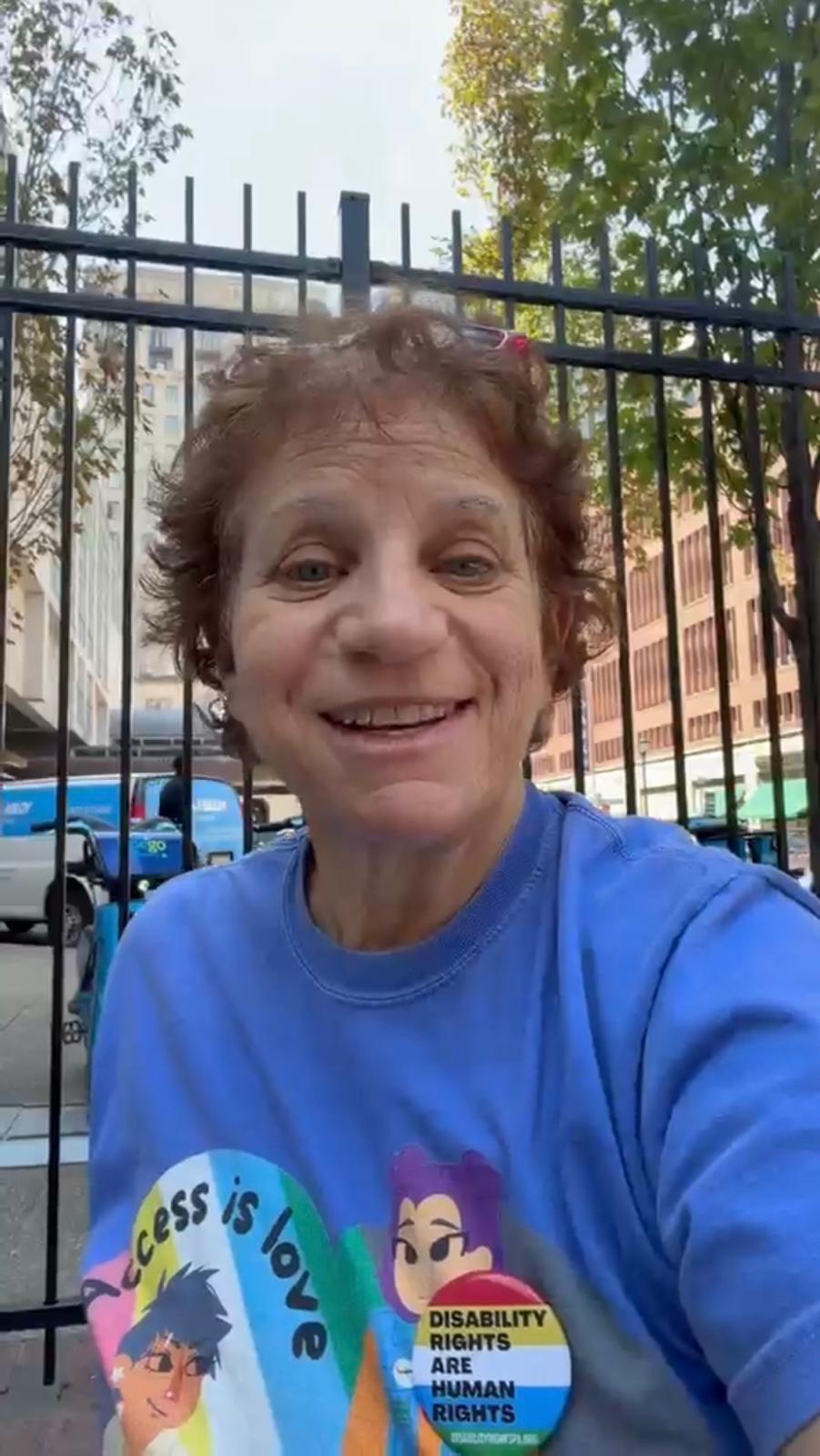 By Rotarian Angie Fuoco
RCWDA Membership Officer
Disability Pride Month is celebrated in July in much of the world. Disability Pride means different things to different people. Read this article and check out the videos posted by members and a guest who share their thoughts on Disability Pride.
Voices of Inclusion!
RCWDA members and guests share what Disability Pride means to them through their experiences, identities, and advocacy. All videos include captions.
Meet Angie Fuoco and Rhonda Edwards
Angie Fuoco and Rhonda Edwards open their hearts in this powerful conversation about living with hearing disabilities — and why Disability Pride Month is so deeply personal to them. Through honesty, courage, and lived experience, they share how hearing loss has shaped their identities, their resilience, and their commitment to inclusion. Their stories remind us that disability is not a limitation, but a source of strength, community, and pride. This video celebrates visibility, empowerment, and the voices that make our movement stronger.
Meet Rotarian Emily Ouimette, USA
July is Disability Pride Month — a time to celebrate the strength, talent, and resilience of people of all abilities around the world. In this video, Rotarian Emily Ouimette shares what Disability Pride Month means to her, the powerful work being done through Rotary World Disability Advocacy, and how each of us can play a role in building a more inclusive world. Every difference is a gift. Every person has unique abilities that deserve to be seen, celebrated, and uplifted.
Meet Honorary Rotarian Kashaf Alvi, Pakistan
Kashaf Alvi shares what disability pride means to him as a deaf person — not as a slogan, but as a lived truth shaped by experience, community, and self-acceptance.
Kashaf speaks about the courage it takes to show up authentically, the importance of claiming space in a world that often overlooks disabled voices, and the joy of embracing disability as a source of strength rather than limitation. His message is a reminder that pride is not just about visibility — it’s about dignity, belonging, and the freedom to define ourselves.
This story is part of the Rotary Club of World Disability Advocacy’s commitment to amplifying disabled voices and building a world where inclusion is not optional — it’s expected. Celebrate Disability Pride Month with us. Share this video. Lift up disabled voices.
Watch Kashaf Alvi’s video on YouTube
Meet Friend RCWDA Member Uzoamamaka Stella Ike, Uganda
Disability Pride Month is a time to honor identity, celebrate resilience, and amplify the voices of people with disabilities around the world. In this video, advocate Uzoamamaka Stella Ike shares a strong and uplifting message about embracing disability with confidence, dignity, and pride.Her words remind us that disability is not a limitation — it is culture, community, and power. Pride means rejecting stigma, standing tall in who we are, and pushing for a world where inclusion is not optional but essential.Whether you’re part of the disability community or an ally, this message encourages you to celebrate, advocate, and keep raising your voice. Pride is action. Pride is visibility. Pride is strength.
Watch Uzoamamaka Stella Ike on YouTube
Disability Pride as a Call to Action
Disability Pride is more than a celebration of identity. It is a call to recognize dignity, challenge exclusion, communicate with kindness, and create communities in which people with disabilities can participate, lead, and thrive. In this article, Angie Fuoco reflects on the meaning of Disability Pride and the role each of us can play in advancing inclusion.
“Let the shameful wall of exclusion finally come tumbling down,” President George Bush exulted as he signed the world’s first civil rights for people with disabilities into law (the Americans with Disabilities Act of 1990 or “ADA”). And as quickly as the ink dried, national inclusion of people with disabilities and disability pride began. Now, each July, “Disability Pride Month” is celebrated in the United States and in many countries around the world.
What’s disability pride? Different things to different entities. I used the word “entities” instead of “people” because I first asked Google AI, which says:
Disability Pride is a movement and cultural shift that encourages people with disabilities to accept, honor, and celebrate their unique identities. It reclaims the word "disability" from being a negative medical condition to a natural, positive part of human diversity.
It’s a beautiful starting definition, since people with disabilities have been subjected to planned mass extinction, experimentation, death-at-birth, abuse, ridicule, blame, and lack of rights, dignity, service, and love—since humanity’s inception. But does it go far enough?
True, the ADA inspired not only “disability pride” but many countries to enact similar laws to protect and serve their citizens. And across the world, we’re moving from eugenics and medical models of disability that try to get rid of or fix people to social and societal models that call on societies and communities to make life accessible for everyone. Yet, progress has been uneven throughout the world and seems painstakingly slow.
The Grim Reality
In some countries, children with disabilities are killed or discarded or don’t get named. Where is room for “pride” where there’s no room for life, a name, or dignity either deserves? And nearly everyone with a disability, me included, has been the butt of jokes and object of discrimination—one-on-one, in groups they belong to, at their workplaces, or in societies.
But I have a name and a calling. So do you.
The Call of Disability Pride
What AI left out—after “accept, honor, and celebrate…”—is the calling. I believe disability pride is a call to those with disabilities to lead the world in not only acceptance, honor, and celebration of us, but into world betterment. Societies and communities are better when all of us can work, sustain ourselves, and thrive—throughout our lifetimes—as disability status changes throughout the lifespan. Because anyone who does not yet live with a disability can acquire one or more at any time, and will likely, if they live long enough.
A Call-in from Us
Every thought, interaction, action is an opportunity to think, speak, listen, design, produce, serve, respond—kindly, more inclusively. And since we often “breathe in” others’ negativity, let’s practice thinking kindly and kind self-talk. Then, we can gently steer the “not-yets” to inclusion when we or others might take offense. RCWDA did this on finding a product that our board thought could cause a person with a certain disability to feel less than others or to feel ridiculed because of that disability. We e-mailed the company that made the product and within hours of our message, the potentially offensive product was gone.
And words? Do we use the R-word or “lame” to describe others? If others do, can we call them in - to kind inclusion, using examples if we can, without embarrassing them? I could respond to “lame” with: “my friend with cerebral palsy might feel bad if she heard ‘lame’ used about her.” Me? I don’t identify as “disabled” so when people call me that, I politely tell them I go by Angie instead of “disabled” and that I have profound hearing loss. I then proceed to tell them how they can help me hear them better.
I recommend everyone read and heed Communicating With and About People with Disabilities | Disability and Health | CDC as a good starting point from the U.S. perspective. (Disclosure: While working at CDC, I helped develop this content.) And an AI search shows wording used in various countries of the world: in the U.S., it’s primarily “people first” where we use “people with disabilities” for groups; in the U.K., it’s “identity first”/“disabled people”; and the U.A.E. uses the official designation: “people of determination.”
A Call for All
Disability pride is a call to everyone, not just people with disabilities. It’s also for “not-yets” and “not-me-s” who have a type or level of disability, but not every disability at every level. This is all people! Responses are accommodations, kind inclusion to people who are different from us. They can be beautiful, especially if we listen with curiosity, not judgment, and do what we’re asked. For instance, I learned recently from a new friend with low vision not to give her visible markers or building numbers as she can’t see them; it’s better to give her corners and a direction (the building on the SW corner at 8th and Market streets).
Some need more time to read or respond. All of us can give each other patience and calm. For me, other hard of hearing people and Deaf, we all need:
- Attention (get our attention first as hearing is focused and intentional)
- Face us (before & during the time you talk - our hearing is directional)
- Closeness (hearing aids & devices don’t work more than 6 feet away)
After these, it varies, so ask what will help if people tell you they’re hard of hearing or Deaf. Most don’t need a sign language interpreter, but they’ll tell you if they do. If an interpreter is present, speak to the Deaf person, not any interpreters. And for most of us who struggle to hear, add to the three above this golden rule: Always be kind; never say “Never mind!” We do mind if you shut down conversation with us. We want to hear you and it’s a struggle for us to hear through hearing aids and devices. Help us hear you and you can make a friend.
Calling All Rotarians!
Let’s all act and respond to disability kindly! Rotarians apply the 4-way test before thinking, speaking, or acting. Is it true? Is it fair? Will it build goodwill and better friendships? Will it be beneficial for all concerned? And Robin Williams’ sage advice is important, since nearly 80% of disabilities are non-visible ones: “Everyone you meet is fighting a battle you know nothing about. Be kind. Always.” So…keep calm. Ask: “How can I communicate with you?” And be kind to all—disabilities, unknowns, and the “not-yets.”
About the Author
Angie Fuoco serves as membership chair of RCWDA. She believes awareness precedes advocacy and that our disability advocacy will create an accessible, inclusive world. Angie’s hope is that her article helps you become aware of your calling—your part in disability advocacy. She lives and works in the city of Philadelphia, Pennsylvania, USA. Angie has severe to profound hearing loss and gladly listens, if you help her hear you.